Login Data Trends Expose Shifts in Preferences for Slot Machines and Poker Variants
Written by Bianca Fischer · Oct 15, 2026

Login Data Trends Expose Shifts in Preferences for Slot Machines and Poker Variants
Login records from major online platforms throughout 2026 show clear movement toward specific categories of slot machines while certain poker formats gain traction over others, and these patterns emerge from aggregated session starts rather than isolated reports. Platforms processing millions of daily entries reveal that players initiate more sessions in progressive jackpot slots during evening hours, whereas classic three-reel titles maintain steadier but lower volume throughout the day, according to figures released by the Nevada Gaming Control Board in its quarterly summary covering July through September.
Slot Machine Categories Drawing Increased Logins
Video slots with five reels and multiple bonus rounds account for the largest share of new logins, and data collected across North American and European operators indicates a 12 percent rise in session starts for titles featuring cascading reels or expanding wilds compared with the same period in 2025. Megaways mechanics appear in a growing number of high-traffic games, while branded content tied to popular media franchises records the highest repeat login rates among users aged 25 to 34. Those who study platform metrics note that players often return to the same cluster of 20 to 30 slot titles rather than sampling widely, which concentrates activity around a smaller selection of releases each month.
Operators report that login spikes coincide with promotional events tied to new slot launches, and one study released by iGaming Ontario tracked a 28 percent increase in account activations during the first week after a major studio update. Players demonstrate preference for games offering frequent small wins over those promising rare large payouts, and this behavior shows up consistently in session duration logs that average 18 minutes for medium-volatility titles versus 11 minutes for high-volatility counterparts.
Poker Variant Login Patterns
Among poker offerings, Texas Hold'em variants continue to lead in total logins, yet shorter formats such as Spin & Go and Zoom poker record faster growth in daily entries. Data compiled through October 2026 indicates that multi-table tournament logins have declined by 9 percent year over year while sit-and-go formats hold steady, and observers attribute the difference to shorter time commitments that align with fragmented player schedules. Pot-limit Omaha appears in more active tables than five years ago, particularly among European users, and regional reports show increased session starts in mixed-game formats that rotate between Hold'em, Omaha, and Stud every few hands.
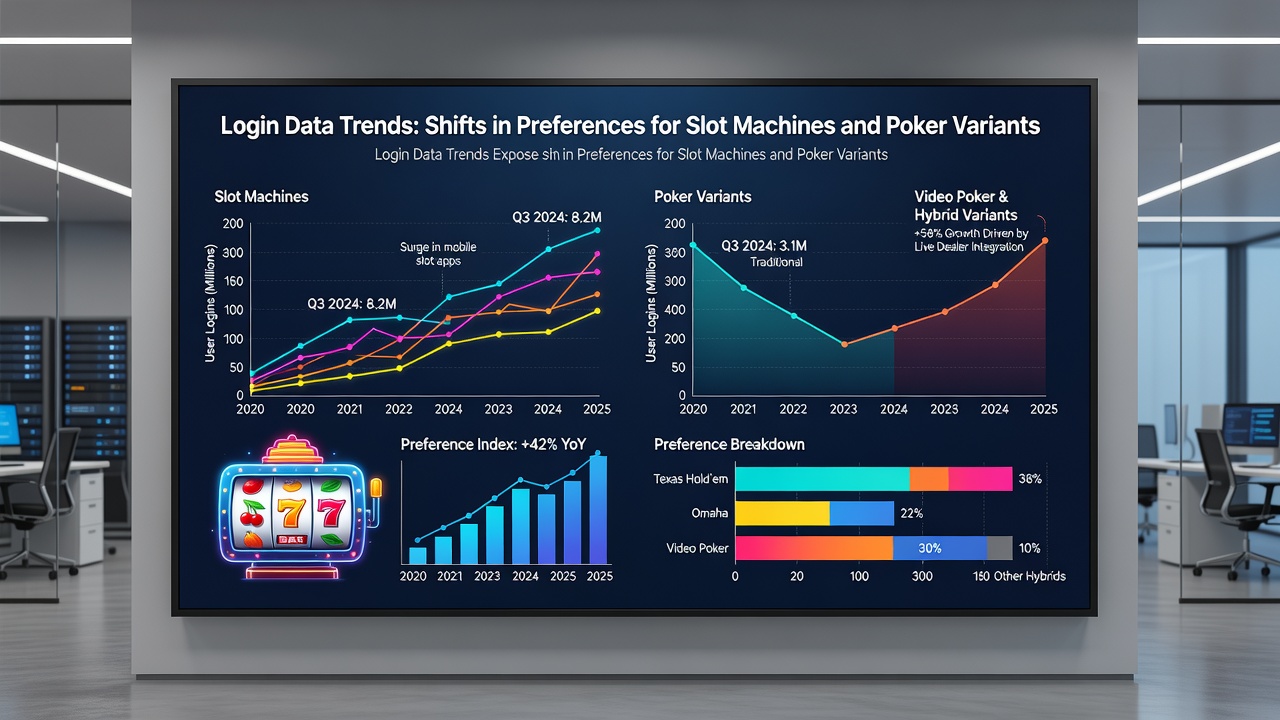
Platform operators note that mobile logins now represent over 70 percent of poker traffic, and users frequently switch between cash games and fast-fold tables within the same hour. Researchers at the University of Nevada, Reno, published findings in September 2026 that link shorter average session lengths to higher table turnover rates, which in turn supports the rise of quick-play poker products over traditional ring games.
Geographic and Demographic Variations
Login trends differ across jurisdictions, with Canadian provinces showing stronger uptake in branded video slots while certain Australian states record elevated activity in poker variants that feature community cards. European markets display balanced growth between both categories, and figures released by the Malta Gaming Authority for the third quarter of 2026 highlight a 15 percent increase in cross-border play from mobile devices. Age-based segmentation reveals that users under 30 initiate more sessions in slots with interactive bonus rounds, whereas those over 40 maintain higher login consistency with established poker formats that emphasize strategy over animation.
Time-of-day analysis further separates preferences, since slot logins peak between 8 p.m. and midnight local time across most regions while poker activity distributes more evenly from morning through late evening. These patterns hold across multiple operators and suggest structural differences in how players allocate attention between chance-based and skill-influenced games.
Conclusion
Login data collected through October 2026 continues to map evolving player behavior toward particular slot features and poker formats, and these records provide operators with measurable indicators of demand. Continued monitoring across additional quarters will clarify whether the observed shifts represent temporary adjustments or longer-term changes in engagement patterns.